


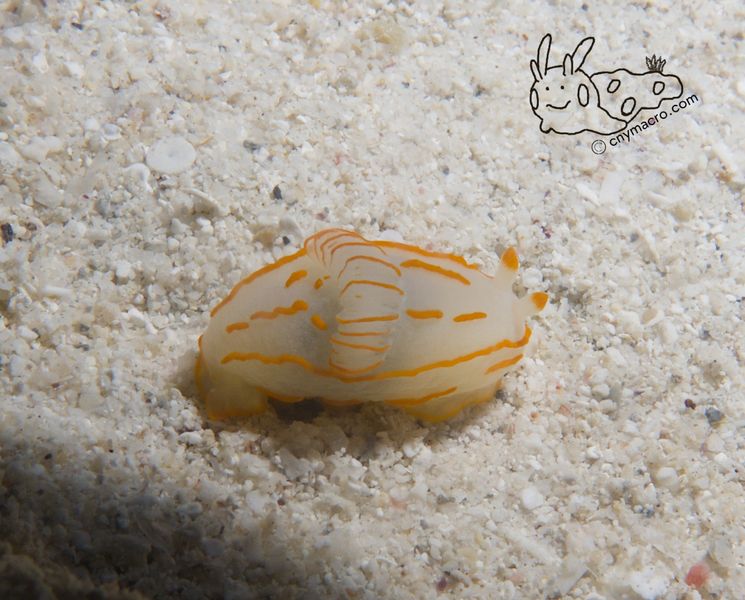
Scientific Name: Gymnodoris striata
Common Name: Striped Gymnodoris
Adult Size: Up to 30 mm
Depth Range: 3 – 30 m; commonly found on sandy bottoms, coral rubble, and reef slopes
Biotope / Habitat: Often observed crawling on sand or rubble near coral reefs, sometimes close to areas rich in other sea slugs. Species of the genus Gymnodoris are active hunters and frequently roam open substrate while searching for prey.
Diet: Carnivorous. Gymnodoris striata is a specialized predator that feeds mainly on other sea slugs, including nudibranchs and sacoglossans. It uses chemical cues to track its prey and can swallow surprisingly large victims compared to its own size.
Reproduction: Simultaneous hermaphrodite. After mating, individuals lay spiral-shaped egg ribbons attached to the substrate. The eggs hatch into planktonic veliger larvae that drift in the water column before settling and metamorphosing into juvenile nudibranchs.
Fun Fact: Unlike many colorful nudibranchs that rely on toxins from their prey for defense, species in the genus Gymnodoris are active predators of other nudibranchs. If you see one on a dive, there is a good chance it is hunting nearby!
With its elegant white body marked by bright orange longitudinal lines, Gymnodoris striata is both beautiful and formidable. Despite its delicate appearance, this striped hunter is one of the stealthy predators roaming the reef floor—an exciting discovery for attentive macro divers.