


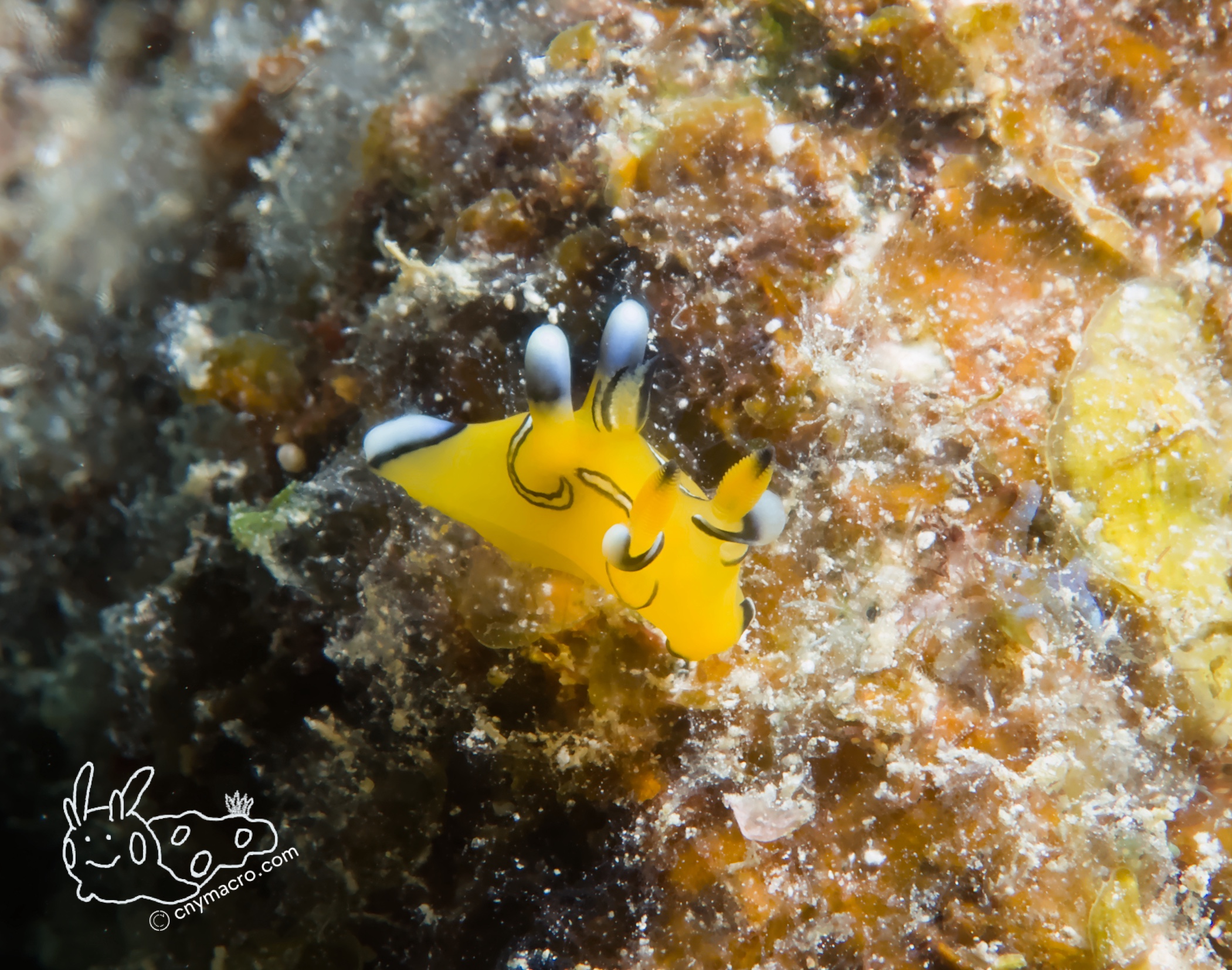
Scientific Name: Thecacera pacifica
Common Name: Pikachu nudibranch
Adult Size: Typically 15 – 35 mm
Depth Range: Benthic zone; most commonly observed in shallow reef environments, with distribution closely tied to the availability of bryozoan colonies; generally recorded between 5 – 30 m.
Biotope / Habitat: Found in tropical waters of the Indo-Pacific, preferring environments with moderate current flow, where bryozoan colonies thrive. Its known range extends from the African coast of the Indian Ocean (Mozambique) through to Indonesia and Vanuatu, and it has also been recorded in the Atlantic. It is typically encountered on coral reef slopes, rubble, and hard substrate — always in close association with its prey.
Diet: A specialized carnivore, feeding primarily on bryozoans — colonial organisms commonly known as moss animals — and other small marine invertebrates found on coral reefs. By consuming specific prey, it can absorb and store certain compounds that may contribute to its unpalatability, enhancing its protection from predators.
Reproduction: Like many nudibranchs, Thecacera pacifica is a simultaneous hermaphrodite, possessing both male and female reproductive organs. When two individuals meet, they exchange sperm, allowing each to subsequently lay eggs. Egg masses are typically deposited as spiral ribbons on or near the bryozoan colonies on which they feed.
Fun Fact: Meet the nudibranch that went viral for looking exactly like a Pokémon — Thecacera pacifica is nicknamed the Pikachu nudibranch thanks to its uncanny resemblance to the iconic character, with its vivid yellow body, jet-black tips, and electric blue accents. But this little slug isn't just cute — those bold colors are a warning signal: aposematic coloration that tells predators loud and clear that this creature is not worth eating. Nature invented Pikachu before Nintendo did!